
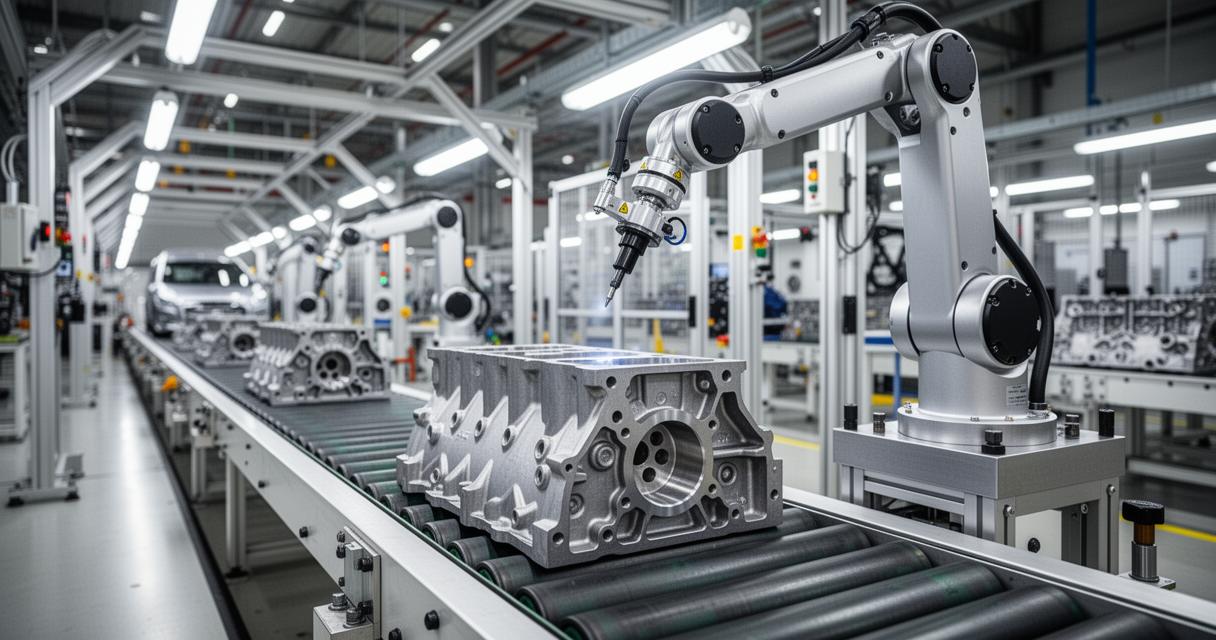
In the automotive sector, the need for reliable, long-lasting part identification has never been more pressing. As manufacturing processes grow increasingly complex and supply chains span the globe, the ability to trace every component from production to end-of-life becomes a fundamental requirement rather than a mere convenience. Among the various industrial marking systems available today, dot peen marking has emerged as one of the most trusted and widely adopted solutions for achieving that goal.
In brief
- Dot peen marking creates permanent, micro-percussion indentations that remain legible through harsh industrial processes like painting and heat treatment.
- The technology is highly versatile, capable of marking various hard metals including steel, aluminum, and titanium with depths ranging from 0.1 mm to over 1 mm.
- Automotive manufacturers utilize dot peen systems to encode critical traceability data, such as serial numbers and batch references, into compact, machine-readable data matrix codes.
- By permanently engraving identification directly into components, manufacturers effectively reduce the risks of counterfeit parts and ensure compliance with strict industry regulations.
- The low-stress nature of the dot peen process maintains the structural integrity of parts, making it safe for use on safety-critical automotive components.
- Flexible machine configurations, including inline, benchtop, and portable units, allow for seamless integration into diverse production environments and assembly lines.
- Compared to alternatives like laser marking, dot peen technology offers a cost-effective and easy-to-use solution that requires minimal operator training.
Why Dot Peen Marking Has Become a Cornerstone of Automotive Manufacturing
Delivering Permanent and Reliable Part Identification on Production Lines
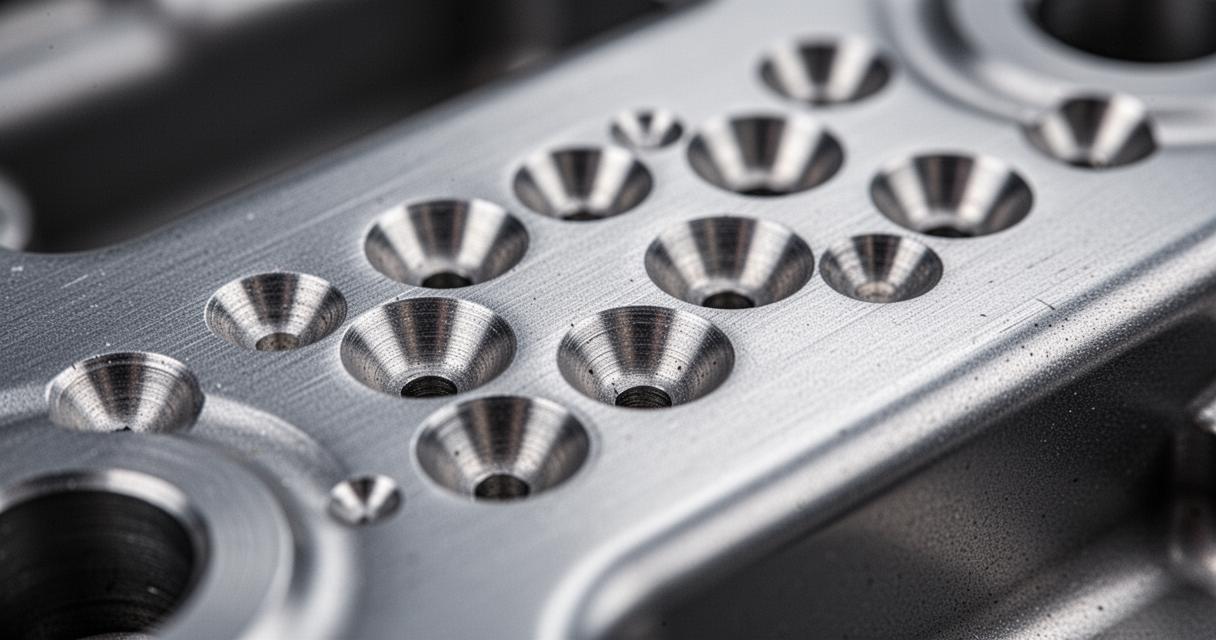
Also referred to as micro-percussion marking, this technology works by driving a carbide-tipped stylus in a controlled series of micro-indentations across the surface of a component, forming letters, numbers, barcodes, or data matrix codes that are legible both by human eye and by automated scanning systems. When it comes to dot peen marking for automotive industry with Technomark, manufacturers benefit from a solution that combines technical precision with practical robustness on the production floor. The marks produced are deeply embedded into the material itself, meaning they remain intact through subsequent processes such as painting, heat treatment, or galvanising.
The range of materials compatible with this approach is notably broad. Dot peen marking is particularly well-suited to hard metals such as steel, aluminium, brass, and titanium, all of which feature prominently in automotive component manufacture. Marking depth typically ranges from 0.1 mm to 0.5 mm under standard conditions, with deep marking exceeding 1 mm where required, ensuring that permanent identification endures across the entire lifespan of a component.
Meeting Traceability and Compliance Demands Across the Supply Chain
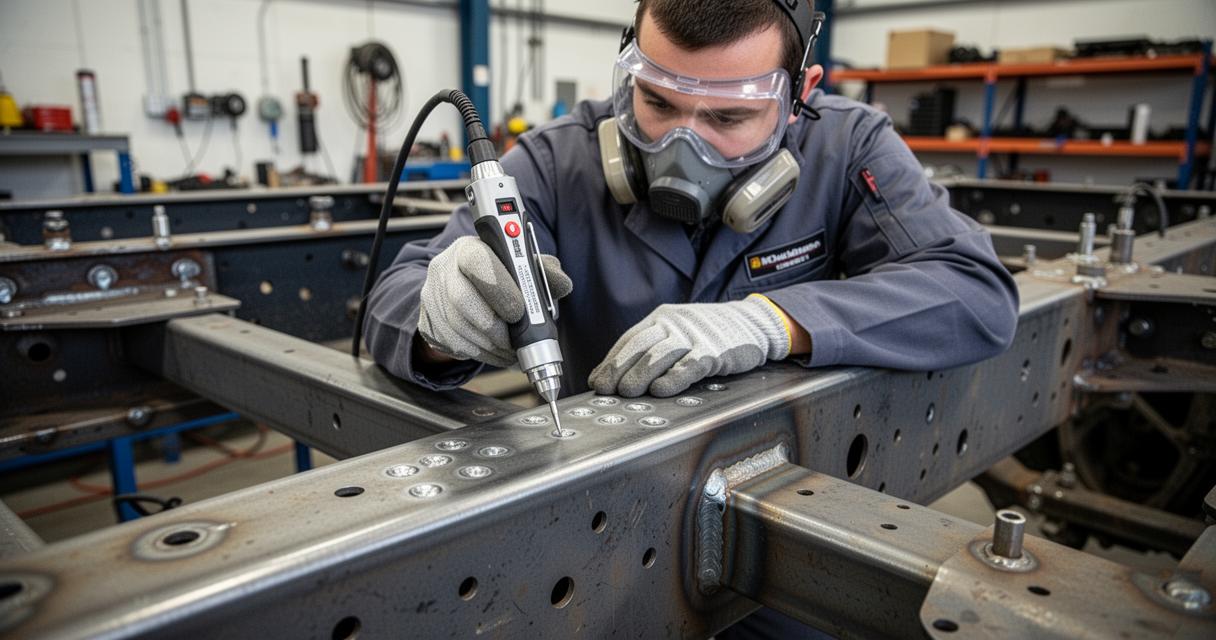
Modern automotive manufacturing operates under stringent regulatory and quality frameworks. Automotive traceability is no longer optional, it is an industry expectation. Every critical part, from engine blocks to chassis frames, must carry verifiable identification that can be read at any point along the supply chain. Data matrix codes generated through dot peen technology allow manufacturers to encode substantial amounts of information, including serial number engraving, batch references, and production dates, into a compact and machine-readable format. This supports not only internal quality management but also compliance with sector-wide standards for direct part marking.
The technology also plays a meaningful role in reducing the risk of counterfeit components entering the supply chain. When identification is physically engraved into the part itself rather than applied via a label or tag, it becomes considerably more difficult to tamper with or replicate.
How dot peen marking supports quality control and operational efficiency
Withstanding harsh industrial environments without compromising legibility
Automotive production environments are demanding. Components are exposed to heat, moisture, cutting fluids, abrasion, and corrosive substances throughout their working lives. Durable marking is therefore essential, and this is where industrial marking systems based on dot peen technology genuinely excel. The marks are resistant to corrosive and abrasive conditions, retaining legibility even after exposure to the kinds of harsh environments typical of both the factory floor and the operational lifetime of a vehicle. This low-stress method of component marking does not compromise the structural integrity of the part, making it appropriate even for safety-critical applications.
In terms of material hardness, dot peen machines are capable of marking materials up to 63 HRC, which covers the vast majority of metals used in manufacturing identification applications within the automotive sector. This versatility means a single system can handle a wide variety of metal engraving tasks without requiring material-specific adjustments.
Integrating seamlessly with automated automotive assembly processes
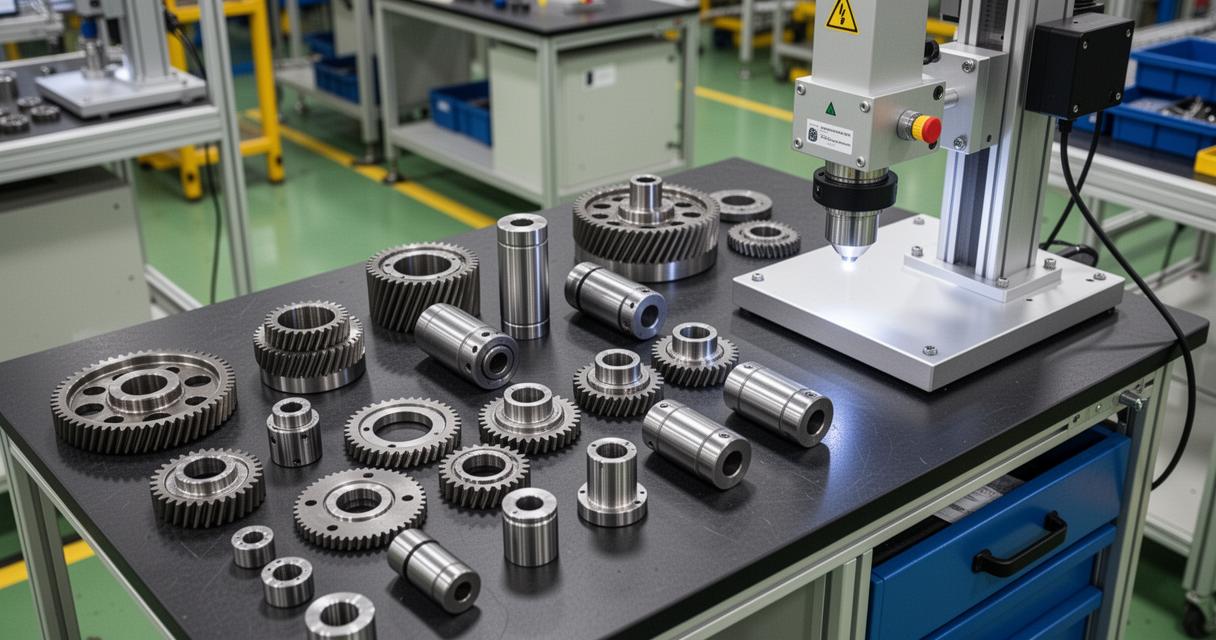
One of the most significant practical advantages of production line integration with dot peen technology is the flexibility it offers in terms of machine configuration. Systems are available as integrated inline units that operate automatically within the production flow, as benchtop models suited to smaller-scale or specialist operations, and as portable marking machines that can be brought directly to large or fixed components rather than requiring those components to be moved. This last option is especially valuable in automotive manufacturing, where certain assemblies are simply too large or too complex to reposition for marking purposes.
Operation is straightforward. Dot peen markers typically require only a tablet or control pad to function, which reduces the training burden and allows quality control teams to deploy marking equipment quickly and confidently. The combination of automation compatibility, ease of use, and lower operating costs compared to alternative technologies such as laser marking makes dot peen an attractive choice for manufacturers seeking both performance and value in their traceability solutions.